
How to Help Animals in Summer: A Guide for School Children

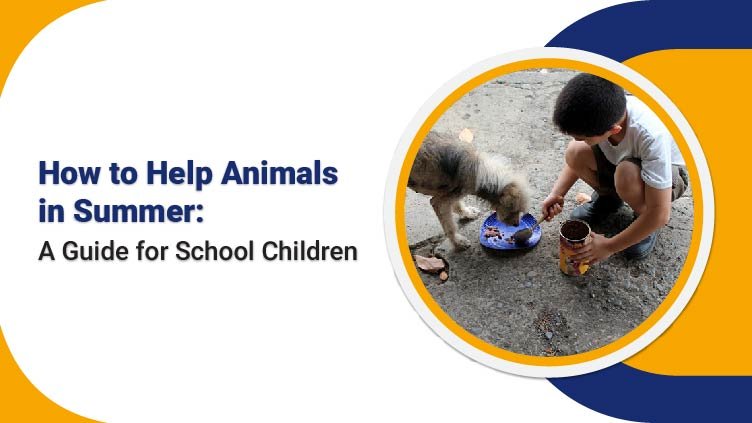
How to Help Animals in Summer is a vital topic that often gets overlooked during the season. Summer means fun, holidays, recreation, and sunshine for humans. But for stray animals, summer is a testing time. Animals, just like other living beings, need water, food, and shelter to stay healthy and hydrated in summer. A responsible school community consisting of teachers and students can play an active role in protecting these voiceless animals. Every little gesture matters and makes a difference!
Understanding the Impact of Summer Heat on Animals
The summer heat and animals’ well-being are directly linked; without support, they face severe risks. Stray dogs, cats, birds, and even small animals like squirrels suffer madly in summer. Without any arrangements for water or shade, they are prone to dehydration, sunstroke, and sunburn. As the sidewalks and roads become hot in summer, it burns their paws or overheats them. Birds can drop from trees as a result of exhaustion; some will struggle to get food as the garbage dries up quicker or is swept away.
The first step is assisting them in understanding their struggle.

How School Children Can Practice How to Help Animals in Summer: Practical Tips
Some effective ways that students, teachers, and families can practise in summer to help out stray animals include:
1. Provide Water Bowls for Stray Animals
One of the best ways to help stray animals in summer is by placing water bowls in shaded areas. Position clean water bowls outside your residence, educational institution, or within your community. Ensure that bowls are positioned in shaded locations, designed for easy consumption, and are cleaned and replenished regularly.

Water bowl placed in shade to help birds stay hydrated in summer (Image Source: Google)
Extra Tip for Students: Use recycled containers like old lunchboxes or broken flowerpots and try making bowls out of them. Add a floating twig or a few stones for bees and insects to safely land on or drink.
2. Build Shady Shelters for Strays
Getting a good, cosy shade area in scorching summer can be a huge relief for stray animals. They get very few options for shade in urban areas. Simple shelters can be made using cardboard boxes, old umbrellas, or wooden crates. Place them in safe spots where animals are likely to rest.

DIY shady shelter for stray dogs and cats to protect them from the summer sun (Image Source: Google)
Extra Tip for Teachers: Encourage students to take part in DIY Classroom Activities. Here you can make simple animal shelters from recyclable materials as a summer project.
3. Organize Awareness Campaigns on Summer Animal Care
Through various campaigns, school notice boards, morning assembly talks, and social media, raise awareness about how every age group can help animals during summer in their own small individual way.
Extra Tip for Schools: You can host something like a “Summer Kindness Week” where students take part in animal welfare drives and presentations.
4. Volunteer or Support Animal Care Groups
Many local NGOs, shelter houses, and rescue groups welcome help. Students can volunteer during their spare time or even assist by raising funds or collecting items required, such as old towels, food, and medicines.

students volunteering at animal shelters to support stray animals during the summer (Image Source: Google)
Bonus Tip for Students: If you think you are too young to volunteer directly, you can still contribute by raising funds through the sale of artwork, bake sales, or book exchanges at school.
5. Avoid Harmful Practices That Distress Animals
It’s a very wrong perception that throwing water on animals will cool them down or bring relief to them; instead, it scares them and causes them shock. Simple acts like bursting balloons or using firecrackers during celebrations can distress animals; avoid them.
Extra Tip for Everyone: Be cautious while driving or cycling during summer, as many animals take rest under vehicles for shade.
6. Protect Birds with Water and Food Trays
Hang small bowls of water or seed trays on balconies, rooftops, or tree branches for birds. Use coconut shells or clay pots that stay cool even under the sun.